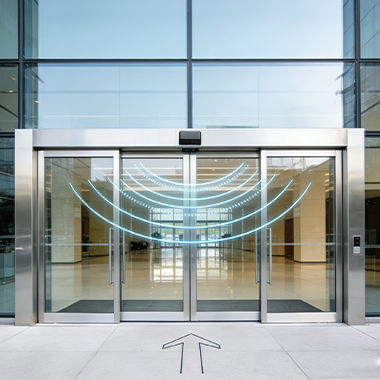
Wybór systemu wejściowego do projektu komercyjnego to jedna z kluczowych decyzji w projektowaniu architektonicznym. Nie tylko kształtuje on pierwsze wrażenie budynku, ale także bezpośrednio wpływa na wydajność ruchu, koszty energii i bezpieczeństwo użytkowników. Niniejszy artykuł, skierowany do architektów, projektantów i projektantów, ma na celu przedstawienie jasnych i kompleksowych wskazówek dotyczących wyboru drzwi automatycznych. Oferuje on szczegółowe porównanie trzech najpopularniejszych typów drzwi automatycznych do zastosowań komercyjnych: drzwi przesuwnych, drzwi wahadłowych i drzwi obrotowych, pomagając w dokonaniu optymalnego wyboru dla każdego unikalnego projektu.
Porównanie podstawowych kryteriów wyboru
Zanim przejdziemy do szczegółowego omówienia poszczególnych typów drzwi, poniższa tabela przedstawia intuicyjne porównanie, które pozwala szybko ocenić wydajność różnych rozwiązań pod kątem kluczowych kryteriów.
| Kryterium wyboru | Ślizgające | Skrzydłowe | Obrotowe |
| Efektywność przestrzeni | Bardzo wysoka (ruch równoległy, nie zajmuje przestrzeni obrotowej) | Niższa (wymaga przestrzeni obrotowej po obu stronach drzwi) | Bardzo wysoka (obracająca się w obrębie stałego średnicy) |
| Przepustowość przejścia | Wysoka (może zapewnić przestronną, czystą szerokość przejścia) | Średnia (ograniczona szerokością skrzydła drzwi) | Najwyższa (ciągły ruch dwukierunkowy, bez oczekiwania) |
| Efektywność energetyczna | Średnia (z bezpośrednim wymianą powietrza przy otwarciu) | Niższa (duża powierzchnia wymiany powietrza przy otwarciu) | Bardzo wysoka (zawsze uszczelniona, izolowana od środowiska wewnętrznego i zewnętrznego) |
| Zakres zastosowania | Sklepy detaliczne, biura, szpitale, lotniska (duża uniwersalność) | Biura, pokoje hotelowe oraz wejścia o niższym natężeniu ruchu pieszych | Luksusowe hotele, duże budynki biurowe, lotniska (o bardzo dużym ruchu pieszym) |
| Estetyka projektowa | Nowoczesny, prosty i przejrzysty | Tradycyjny i elegancki | Wielkogabarytowy i ikoniczny |
| Koszt początkowy | Średni | Niżej | Wyższy |
Analiza szczegółowa: trzy typy drzwi
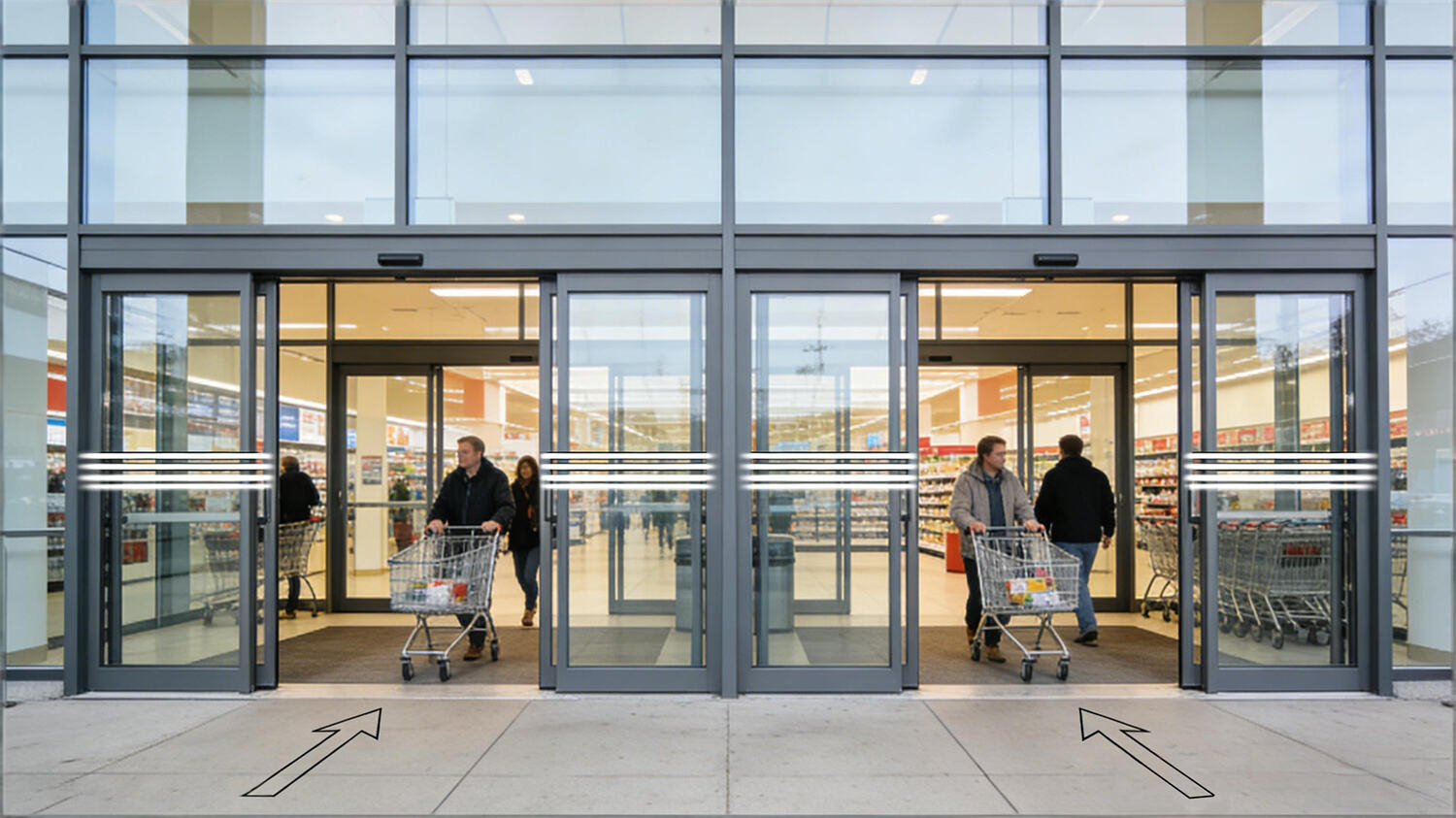
1. Drzwi przesuwne: idealne połączenie wszechstranności i nowoczesności
Drzwi przesuwne są obecnie najpopularniejszym i najbardziej wszechstronnym rozwiązaniem w zastosowaniach komercyjnych. Działają one poprzez poziome przesuwanie się, tworząc jasno widoczną przestrzeń otwartą, zapewniając nieporównywalną niezawodność oraz elastyczność projektową.
- Główne zalety:
- Oszczędność miejsca: ponieważ skrzydła drzwi przesuwają się równolegle do ściany, są one idealne dla projektów o ograniczonej przestrzeni przy wejściu lub w wąskich korytarzach.
- Wysoka wydajność przy dużym ruchu: dwustronne drzwi przesuwne mogą tworzyć bardzo szerokie przejścia, łatwo przepuszczając podróżujących z bagażem, wózkami zakupowymi lub łóżkami szpitalnymi, zapewniając płynny ruch pieszy.
- Wielozadaniowość projektowa: od całkowicie szklanych konstrukcji „bezramowych” po solidne ramy aluminiowe – drzwi przesuwne mogą bezproblemowo wpasować się w niemal każdy nowoczesny wystrój architektoniczny.
- Kwestie do rozważenia przy wyborze:
- Wymagają wystarczającej przestrzeni po bokach ściany, aby pomieścić panele drzwiowe w pozycji otwartej.
- Choć szczelność powietrzna nowoczesnych drzwi przesuwnych znacznie się poprawiła, ich wydajność energetyczna w warunkach skrajnego klimatu jest nieco niższa niż u drzwi obrotowych.
- Propozycja OUTUS:
Wybierz drzwi przesuwne, gdy Twój projekt wymaga niezawodnego i wydajnego rozwiązania wejściowego, dostosowanego do różnych stylów architektonicznych. Doskonale sprawdzają się w większości obiektów komercyjnych, w tym w sklepach detalicznych, placówkach opieki zdrowotnej, biurach oraz centrach transportowych.
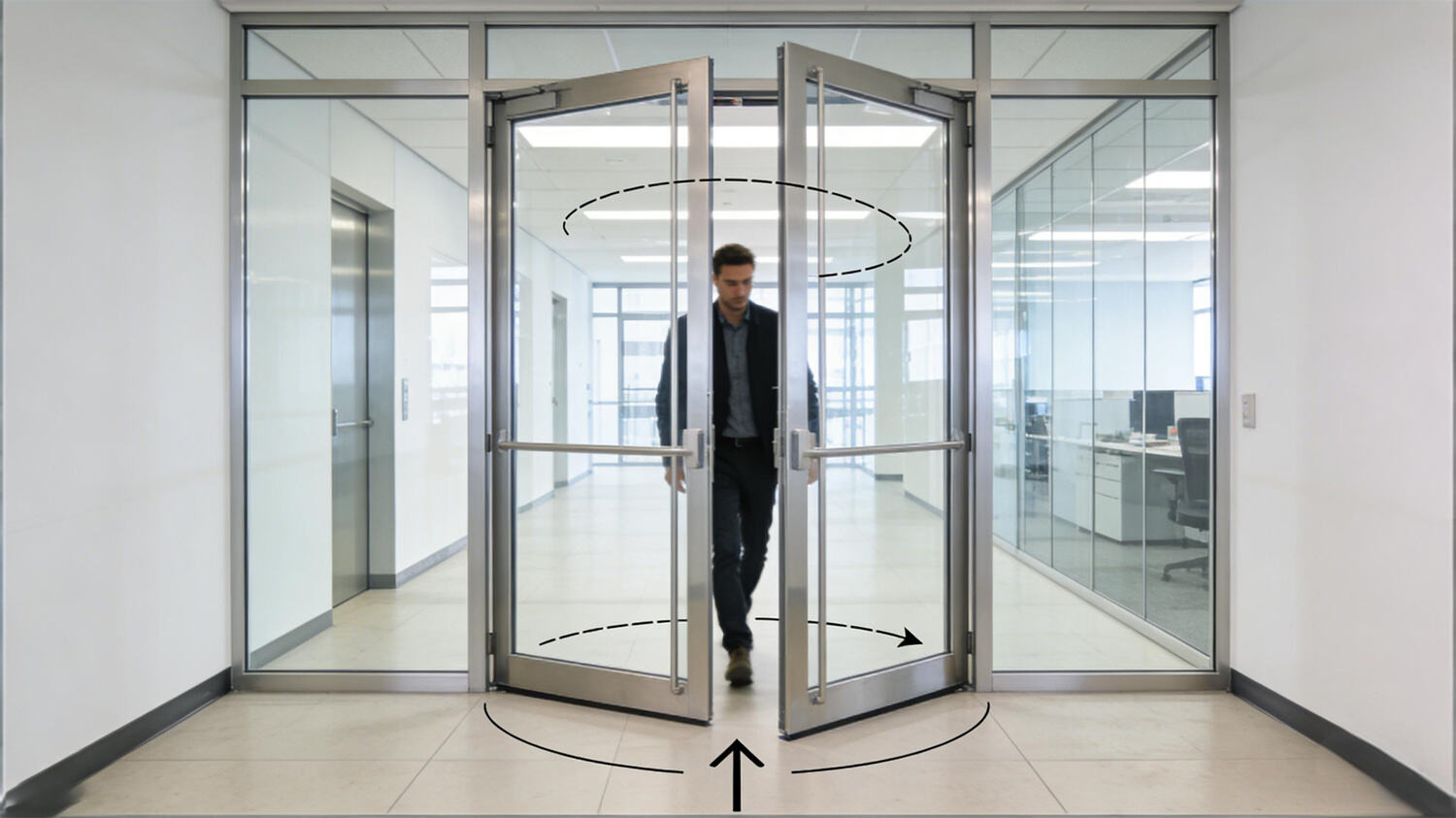
2. Drzwi obwodowe: klasyczne i ekonomiczne rozwiązanie
Drzwi obwodowe to najbardziej tradycyjna forma automatycznych drzwi, napędzanych silnikiem, które otwierają się do wewnątrz lub na zewnątrz. Zazwyczaj stosuje się je przy modernizacji istniejących drzwi ręcznych lub automatyzacji wejść o stosunkowo niskim natężeniu ruchu.
- Główne zalety:
- Opłacalność: Spośród trzech typów drzwi obrotowych zwykle wymagają one najniższych początkowych inwestycji i kosztów instalacji.
- Łatwa modernizacja: Automatyczne napędy można łatwo zainstalować w istniejących ramach drzwi, co czyni je idealnym rozwiązaniem do ulepszenia dostępności.
- Zgodność z tradycyjną estetyką: Drzwi obrotowe są najlepszym wyborem w projektach, w których konieczne jest zachowanie klasycznego lub historycznego stylu architektonicznego.
- Kwestie do rozważenia przy wyborze:
- Zużycie przestrzeni: Ruch obrotowy wymaga znacznej przestrzeni wolnej zarówno wewnątrz, jak i na zewnątrz budynku, co może utrudniać przepływ ruchu w korytarzach lub strefach wejściowych.
- Odporność na wiatr: W warunkach wietrznych drzwi obrotowe wymagają silniejszych silników oraz bardziej wytrzymałej konstrukcji, aby zapewnić niezawodne działanie.
- Efektywność ruchu: Jednokierunkowy przepływ ruchu i ograniczona szerokość otwarcia czynią je nieodpowiednimi dla głównych wejść o dużej gęstości pieszych.
- Propozycja OUTUS:
Drzwi obrotowe są dobrze dopasowane do wtórnych wejść do budynku, wewnętrznych drzwi biurowych lub projektów remontowych realizowanych przy ograniczonym budżecie. Zapewniają one unikalne zalety w zakresie spełnienia wymogów dotyczących dostępności (np. przepisów ADA).
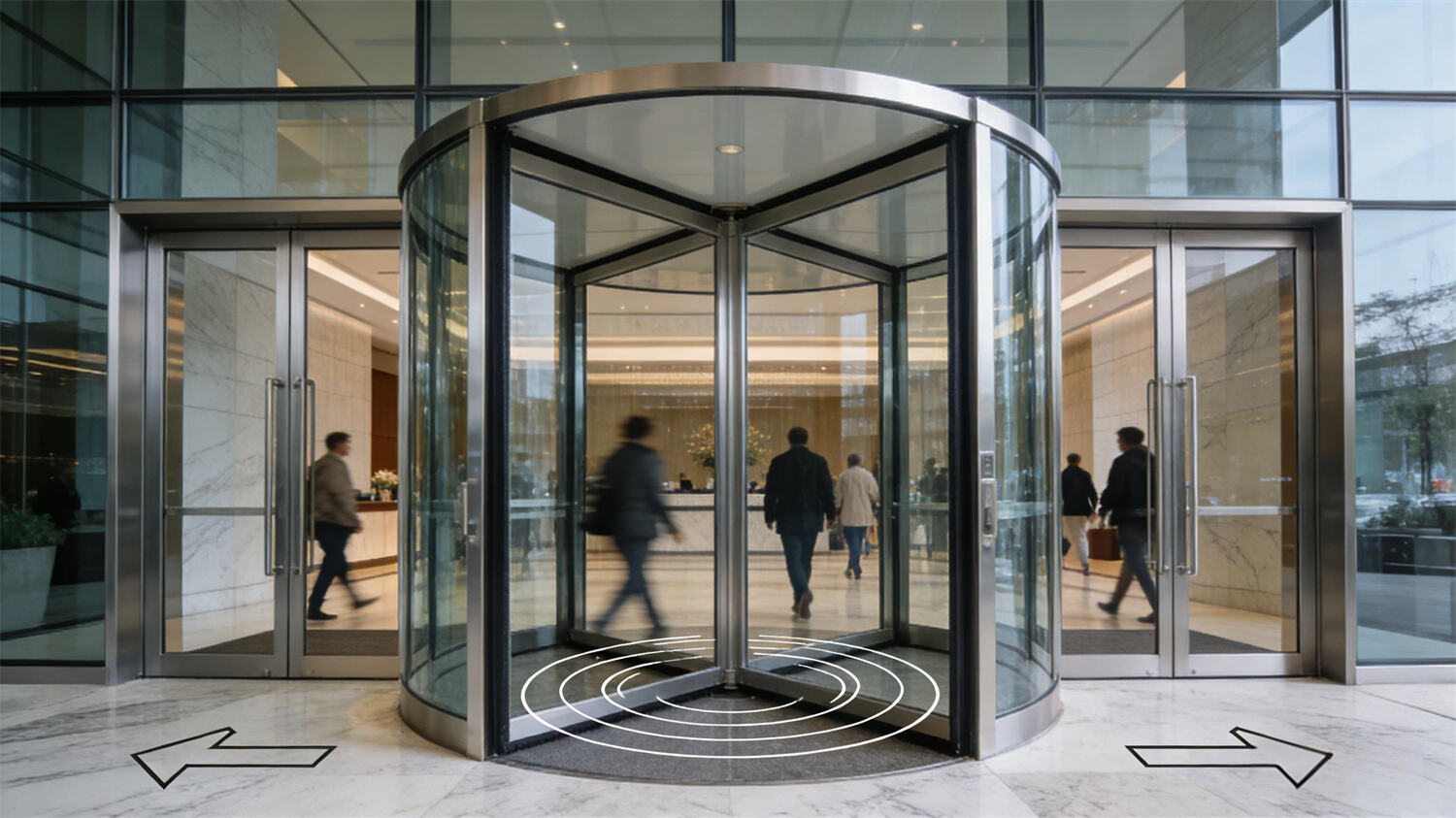
3. Drzwi obrotowe: ostateczna wydajność energetyczna i charakterystyczny wygląd
Drzwi obrotowe stanowią premiumowe rozwiązanie dla wejść. Wykorzystują centralny wał obrotowy oraz wiele skrzydeł, tworząc przejście stale uszczelnione względem otoczenia zewnętrznego.
- Główne zalety:
- Nieporównywalna wydajność energetyczna: dzięki swojej naturze „zawsze otwarte, zawsze zamknięte” drzwi obrotowe maksymalnie zapobiegają przedostawaniu się nieoczyszczonego powietrza, kurzu i hałasu do wnętrza budynku. To znacznie zmniejsza obciążenie systemów wentylacji i klimatyzacji, czyniąc je idealnym wyborem dla budynków ekologicznych.
- Doskonała przepustowość ruchu: pozwalają jednoczesne obsługiwania dużych objętości ruchu dwukierunkowego, zapobiegając utworzeniu tłoku przy wejściach w godzinach szczytu.
- Wzmacnia wizerunek budynku: Ich imponująca konstrukcja czyni drzwi obrotowe samodzielnym elementem architektonicznym, skutecznym narzędziem wzmocnienia wizerunku marek luksusowych hoteli, siedzib korporacyjnych oraz flagowych centrów handlowych.
- Kwestie do rozważenia przy wyborze:
- Wysokie początkowe koszty: Koszty produkcji i montażu drzwi obrotowych są znacznie wyższe niż w przypadku dwóch pozostałych typów.
- Ograniczenia w zakresie dostępności: Mogą być mniej przyjazne dla osób przewożących duży bagaż, użytkowników wózków inwalidzkich lub osób pchających wózki dziecięce. Zwykle wymagane jest dodatkowe, przylegające drzwi otwierane skrzydłowo lub przesuwnie zapewniające dostępność.
- Propozycja OUTUS:
Gdy projekt wymaga wyjątkowej efektywności energetycznej, musi obsłużyć bardzo intensywny ruch pieszy oraz ma stworzyć imponujący, luksusowy wrażenie wejścia, drzwi obrotowe stanowią niepowtarzalną i opłacalną inwestycję.
Podsumowanie: Wybór odpowiedniego rozwiązania zgodnego z Twoją wizją
Nie ma jednej „najlepszej” drzwi automatycznych – istnieje jedynie wersja „najbardziej odpowiednia”. Dla architektów i projektantów zrozumienie podstawowych cech każdej z kategorii drzwi jest kluczowe przy podejmowaniu świadomych decyzji.
- Wybierz drzwi przesuwne, aby podkreślić ich uniwersalność i nowoczesny charakter.
- Wybierz drzwi obrotowe, aby uzyskać harmonię klasycznej estetyki i korzyści finansowych.
- Wybierz drzwi obrotowe, aby zainwestować w maksymalną wydajność energetyczną oraz stworzyć wyjątkowy, rozpoznawalny element architektoniczny.
Firma OUTUS zobowiązuje się do dostarczania pełnej gamy produktów w zakresie drzwi automatycznych oraz profesjonalnego wsparcia technicznego, które pomoże zrealizować Twoje projekty architektoniczne. Skontaktuj się z naszymi doradcami technicznymi, aby znaleźć idealne rozwiązanie wejściowe do swojego kolejnego projektu.



 EN
EN